Presentation
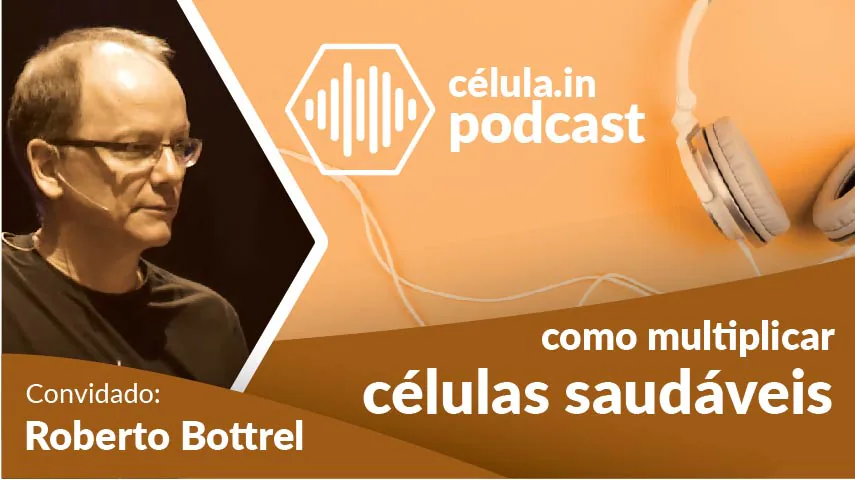
Roberto Bottrel (in memoriam) was youth pastor at the Belo Horizonte Central Baptist Church from 2004 to 2016; his network had more than 500 cell groups.
Roberto shows the importance of understanding the reality of small groups and how this is fundamental for cell group multiplication.
Summary
Multiplying a cell group starts with understanding why, not with technique: whoever jumps straight to the practical part gets nowhere. That is the argument of Roberto Bottrel (in memoriam), formerly youth pastor at Igreja Batista Central de Belo Horizonte, in this célula.in Podcast interview about the book he wrote, Multiplicação, o desafio do cristão da liderança e da igreja.
He takes on the resistance to numbers inside the church. Part of it comes from a mystical view that separates the ordinary from the supernatural; part comes from the opposite excess, of churches that turned into management by targets. For him the data exists to reveal the reality of a group, such as a lack of focus or of real relationships, and to make action possible.
A healthy group, as he describes it, has a good leader, committed members, a suitable setting, a clear vision and God present in that community.
And on closing a group, the criterion he defends is stagnation, not the absence of multiplication: a group where people are growing, however slowly, should not be closed.
Listen to it at:
Listen to it at:

Do you feel that your book, Multiplication, is the distillation of your journey as pastor in a cell-based church?
Writing the book was a challenge that I received because we have a lot of history, a lot of experience, and we end up getting stuck in the body.
Then they challenged me to write the book because then it can go where I can't. The idea was to be the most comprehensive, but that's an impossibility because a life is a life and a book is just a book.
I tried to focus on the multiplication theme, recounting our experiences throughout the process, precisely to help pastors, leaders, believers who want to live the gospel in a very efficient, very radical and purposeful way. To be successful in their challenges.
The book has two parts. The first one establishes and clarifies principles and the second one you talk more about the practical part. Do you believe that one of the reasons that some churches fail to transition to the cell-group model is because they focus on the practical part leaving aside principles?
The truth is that we are very focused on the final. So, people are in a hurry, they want the results and the idea of the book is to present exactly why, why change, why make a cell group, why open a cell group, why trade a church for that model.
If you simply take the second part of the book and apply without a reason, then you will never get anywhere. So the key is for you to understand the reason why we should do anything and the book tries, in the first part, to explain exactly why we have to multiply?
That is the “X” of the issue and how it will actually vary too much from church to church, from the social background that that church works with, or from culture. So coming here to Europe, the reality is different, they will apply how differently, but why remains the same.
Simon Sinek has a talk on TED TALK. How great leaders inspire action, it's worth watching this talk, it's on YouTube, he explains very well that great leaders inspire people because they always start from why.
Many churches live different cell group views, among others we have the MDA, M12, Church with Purposes. Can the principles covered in your book be applied to any cell group model?
Absolutely! The first part of the book undoubtedly... there is no discussion because it talks exactly about the biblical basis, about God's will to save people, about the role of the church, so that's standard. In my view, it's not specifically a model.
The second part is more practical, it's a very specific approach to how we can lead church cell groups to multiplication. In this part, of course, any of these cell group lines can take advantage of the tips, but there will be some differences here and there.
I don't consider them to be very relevant because, at the end of the day, a genuine cell group movement is aimed at multiplication and what the second part of the book deals with are tips for generating focus on the multiplication process of a cell group. I think everyone can take advantage.
Throughout the book you address the issue of numbers and even touch on the fact that some people think that numbers don't fit into the church's spirituality. Do you believe that this is a characteristic of Brazilians or also of other countries.
First, people have a very mystical vision of the church. Society in general relates church to something mystical. Then, believers within the church often separate their lives into normal things and then, in the church, there is the supernatural.
When we want to bring numbers, controls, and evaluations of results into something that “should be mystical” there is conflict. And to make matters worse, many churches have embraced a business vision, so it's a vision focused on results, management by goals, and then things also go to another extreme.
I don't think we can be left on one side or the other, but the numbers are useful for our efficiency as an organization's administration. I think that if they are used well they can be a blessing.
For me, a biblical example that relates this very well is God giving every instruction to tell. We see this in the book of Numbers, so everything was counted there, recorded down to the smallest detail. Why? Because it was important.
But then in another situation, we see King David doing the same, counting his armies, but for the wrong motivation, and then he created chaos, a tragedy for the people.
The question isn't whether involving church with numbers or numbers with church is a good thing, no. I don't think it's going around there. It's what our heart is like, what is our motivation for using numbers.
Do you think that this trait of considering numbers in the church to be a mystical thing, is it universal?
I see it this way, culturally, some societies are more focused on these controls and others are more relaxed. So a clear comparison here is Germany and Spain. Naturally, the Germans will like the numbers much more than the Spanish.
Now, if Spaniards understand that numbers can help them improve the quality of their cell groups, fix some deviations in the direction of a cell group that is not growing because of lack of focus, lack of love, lack of developing relationships, the numbers will indicate this and Spaniards who would not be concerned with numbers would be blessed to have the facts and data to act on what matters to them.
Now, the Germans, historically we see this, is a very organized society, everything is at hand, facts and data, very focused, results-oriented, so for them I believe that it will be much easier to do those controls, to maintain the controls, and to know how to use the numbers in an appropriate way, not on vanity, not to be arrogant.
You mentioned that some churches were entrepreneurial and that they brought goals and everything else. But you brought exactly the goals to your book.
It's the same reasoning, the motivation of the heart. If we set goals and then we become slaves to them, using them as elements of coercion, embarrassment, as a whip to make the gang work, that's fine... we become a company and it's over...
Now from a slightly more reasonable, healthier view: the goals will establish a path, a direction, and a concentration of energy to achieve that result.
Because if we don't have goals, we're kind of just living our daily lives and we'll see what happens and then the result is very weak in the end. We need to establish where we want to go, what we want to do, what our challenge is.
It has to be something challenging, but attainable because then we stop doing some things that are not cooperating with that objective and in the end our actions will help us achieve the goal.
He has a very controversial goal in his book: The Presence of God. Tell me a little bit about her.
Let's first understand the concept of the thing, then we enter specifically into the question of God's presence. The idea is that we have a healthy cell group and some elements will indicate that that small group is healthy.
A healthy group must have a good leader, who has committed members, who has an appropriate environment, who is a small group who has a clear vision and, of course, that God is manifested in that community.
So that small group with God acting, people being reached, marriages being transformed, people being free from addictions, with miracles happening. We look at this and say, “Wow, that's a healthy cell group!” We want to multiply that cell group into other healthy cell groups.
So, what we basically did was list what are the elements that determine the health of a cell group. And one of those elements is the manifestation of God's presence.
Of course we know that God is everywhere so, there's no way to increase that... obvious!
However, the manifestation of God, visible, practical, active in the people of that community, may be minimal or it may be wonderful. We have cell groups in Central, where you go to the meeting and nothing happens. It's like a group of university students getting together to study a book.
Some cell groups that are more focused on praise and so on... so it's a group of friends who get together at a bar and sing some songs, because of God there, nothing. Nothing happens. No one is transformed, no one is saved, no one is brought to a baptism, a demonstration of their life's commitment to God, to the church. So, God's presence is fundamental to a healthy cell group.
Now “How do you set a goal of increasing God's presence?” Good heavens, if I am defining what my objectives are with the current cell group and it needs to work so that, at the end of a certain period, it multiplies a new cell group, which is also healthy.
How am I going to multiply one cell group into another, that is healthy, if we are not even talking about the manifestation of God. So, one of our objectives is that this presence, this manifestation of God, be intensified in that group to generate a healthy multiplication.
So that presence has to be intensified, people have to be touched by God, they have to have their lives transformed, believers who were stagnant are now opening up, God is changing their hearts and now they are offering to serve God, to lead a cell group, so God's presence needs to be intensified.
But then, when you set that as one of the goals, then the people go crazy... “Oh, so they're now wanting to fit God into a goal.”
While including the presence of God as one of the goals was one of the basic things to achieve healthy multiplication, it is a supernatural action of God. How am I going to establish the actions that we have to work on in a cell group for healthy multiplication leaving this out? There's no way.
What we have always worked with our leaders and is well detailed in the book is what are the elements that would indicate this presence of God.
Roberto, is there a factor that, no matter how good the cell group leader's training is, ends up discouraging a new leader?
First of all, I think that the concept of leadership is very distorted in general and ends up being difficult for people to accept the challenge and when they accept, they enter through some rather complicated paths.
For example, she prepares, studies, trains, and then she finally takes on a cell group. It is placed upon her, from the church and from her also that she is now a leader and she is a ready leader. That's totally false.
The fact that he took over a cell group does not mean that he is ready, it means that he has advanced in some stages and is now in a new phase of growth, now with a responsibility.
So, if we understand that we are in the process and not ready, the barriers that come with the difficulties that come are part of the growth. It is necessary to learn to face this in order to grow, it is necessary to learn to face frustration, a mistake, or the closure of my cell group.
People think they're ready so now the only thing that's expected of them is to be successful and that's very heavy, it's very frustrating.
The person will learn to lead a cell group in practice and as he becomes experienced in this he will no longer stumble upon those initial challenges, he will mature as a leader.
That's why you need to keep studying, you need to keep reading the books, you need mentoring, you need supervision. The church must create these structures, demonstrating to it and to the entire community that this is not a ready element.
When is it necessary to close a cell group? What's the best way to do this so that the people who are there don't get lost?
Look, for me the reason to close a cell group is stagnation. A cell-based church is a church in motion. So while people are growing in a small group, sometimes not as fast or as much as we would like, but it's a growing group, I don't see the reason to close. Even if she hasn't multiplied.
When we set a goal, for example, in Brazil to multiply a cell group once a year, it is because it is a feasible, possible goal, but we are not the ones who determine this, it is God who gives the growth.
What we see on average, in practice, is that it's a possible thing, so we're going to work in that direction, but we need a special blessing from God because we're talking about the salvation of people, transformation of character, change of life. The result of these transformations is the multiplication of a cell group. We couldn't generate that.
But it's a problem when you're in a small group where you suddenly have 6.7 people there and no one can attract new ones to the group, no one is growing, no one is willing to go one step further.
For example, there is a challenge of intensifying the moment alone — no one answers; there is a challenge of greater commitment to the local church — no one answers; there is a challenge for people to serve, to grow as leaders in training — no one answers, there will be a course now, a seminar like this — no one will. I mean, the leader who is spending, investing his time there, he's in a mess, nobody wants to walk, so he's wasting energy and time for nothing. It's simply entertaining consumers.
In such a case the cell group has to close. Because she's going to be there for how long, 1 year, 2 years, 3 years, 5 years, she's going to be there the whole time because no one is interested in growing up.
Now a cell group with 5 people, then after 1 year of work, there are 8 people there, is not enough to multiply, but people are growing. There were conversions, one was baptized and then they are working. Then the next year there were 10 people, I mean, they were slow - someone might say - but the speed is very particular to each one, some are more open and others are not. But I see a growing cell group.
 Facebook
 WhatsApp